TRIBAL NATIONS MAPS

  • Home
    • About
    • Osage Nation Map
    • Pipeline Map
    • Testimonials
  • Purchase Here
  • As Featured In
    • Newspaper articles
    • Radio Interviews
  • Gallery
  • Contact
  • More.....
    • WHO ARE OUR CUSTOMERS
    • INTERVIEWS
    • GOFUNDME campaign-Donate !
    • Resource list of Native books/movies/websites
    • Tribal Name Meanings/Bibliography
    • Who These Maps Benefit
    • Custom design maps
    • Posters and Art Canvases
    • FAQs
    • Accepted payment types
    • Framed & Rolled Art Canvas
  • Gift Shops Only
  • Home
    • About
    • Osage Nation Map
    • Pipeline Map
    • Testimonials
  • Purchase Here
  • As Featured In
    • Newspaper articles
    • Radio Interviews
  • Gallery
  • Contact
  • More.....
    • WHO ARE OUR CUSTOMERS
    • INTERVIEWS
    • GOFUNDME campaign-Donate !
    • Resource list of Native books/movies/websites
    • Tribal Name Meanings/Bibliography
    • Who These Maps Benefit
    • Custom design maps
    • Posters and Art Canvases
    • FAQs
    • Accepted payment types
    • Framed & Rolled Art Canvas
  • Gift Shops Only
  • Purchase Here
  • >
  • Books
  • >
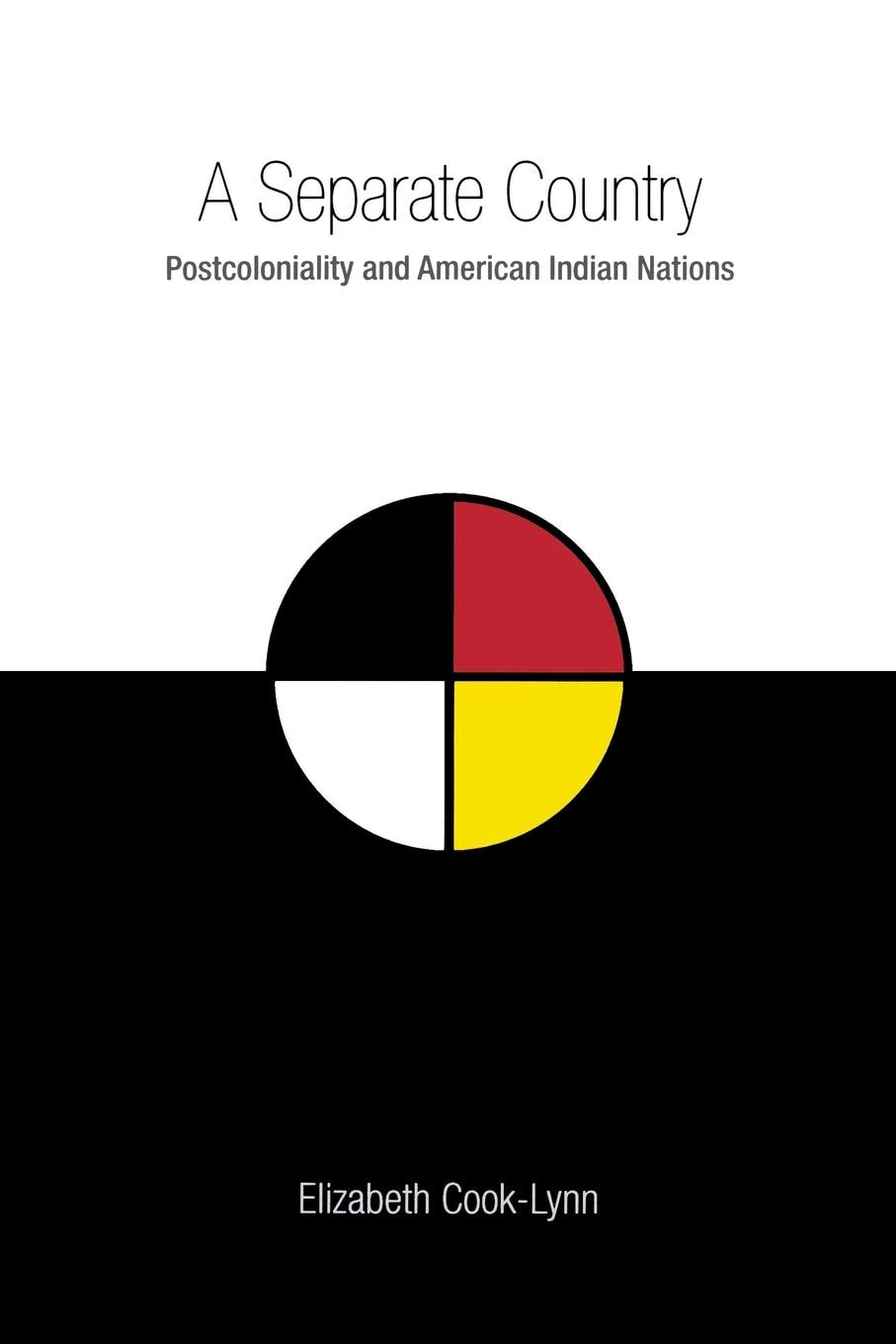
  • A Separate Country: Postcoloniality and American Indian Nations

A Separate Country: Postcoloniality and American Indian Nations

SKU:
$33.00
$33.00
Unavailable
per item

Elizabeth Cook-Lynn takes academia to task for its much-touted notion that “postcoloniality” is the current condition of Indian communities in the United States. She finds the argument neither believable nor useful―at best an ivory-tower initiative on the part of influential scholars, at worst a cruel joke. In this fin de career retrospective, Cook-Lynn gathers evidence that American Indians remain among the most colonized people in the modern world, mired in poverty and disenfranchised both socially and politically. Despite Native-initiated efforts toward seeking First Nationhood status in the U. S., Cook-Lynn posits, Indian lands remain in the grip of a centuries-old English colonial system―a renewable source of conflict and discrimination. She argues that proportionately in the last century, government-supported development of casinos and tourism―peddled as an answer to poverty―probably cost Indians more treaty-protected land than they lost in the entire nineteenth century. Using land issues and third-world theory to look at the historiography of the American Plains Indian experience, she examines colonization’s continuing assault on Indigenous peoples.


Paperback. 2011. Cook-Lynn, Elizabeth.
  • Facebook
  • Twitter
  • Pinterest
  • Google+
Add to Cart

    Contact Form

Submit
Picture
Tribal Nations Maps
949-415-4981
​[email protected]
Copyright 2025 Tribal Nations Maps - All Rights Reserved

CHECK OUT OUR SISTER STORES!

Picture
Picture